Why the Organizational Latency Index Should Be a Board-Level Metric by 2027

Board members reviewing business performance data and Organizational Latency Index metrics in a modern conference room.

Boards track financial, customer, and AI KPIs, but they still lack an earlier operating metric. The Organizational Latency Index helps measure how quickly an organization learns and acts.

What the First Organizational Latency Baseline Is Designed to Reveal

Leadership team reviewing business information to measure Organizational Latency and decision delays.

Building the First Baseline Responsibly The first Organizational Latency baseline is being built to answer a question most leadership teams already feel but rarely measure: how long does it take for important problems inside the business to reach leadership with enough context to act? Most leadership teams can name a recent problem that reached them … Read more

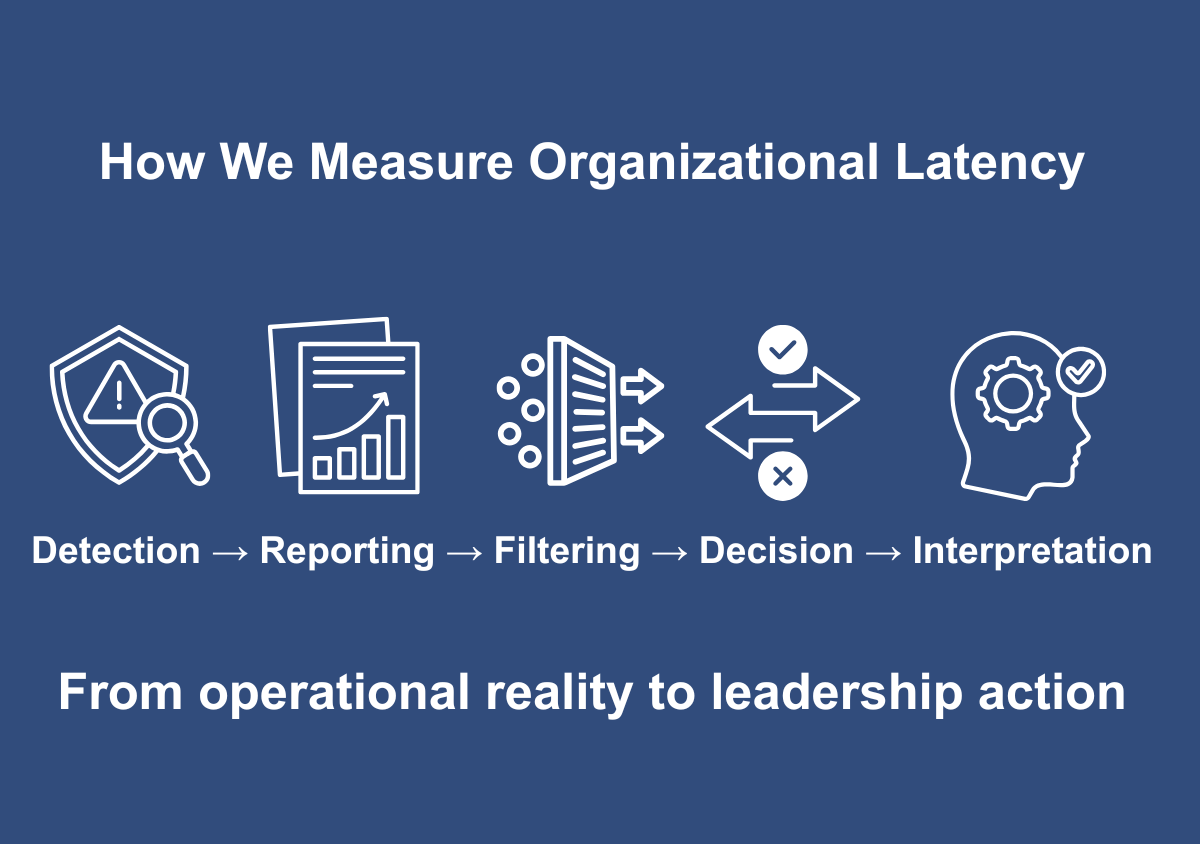
How We Measure Organizational Latency: Methodology, Caveats, and Why Most Companies Have Never Tried

Most companies measure outcomes after delay has already happened. This methodology piece explains how Tezox measures Organizational Latency, the time between operational reality and leadership action.

Introducing the Organizational Latency Diagnostic

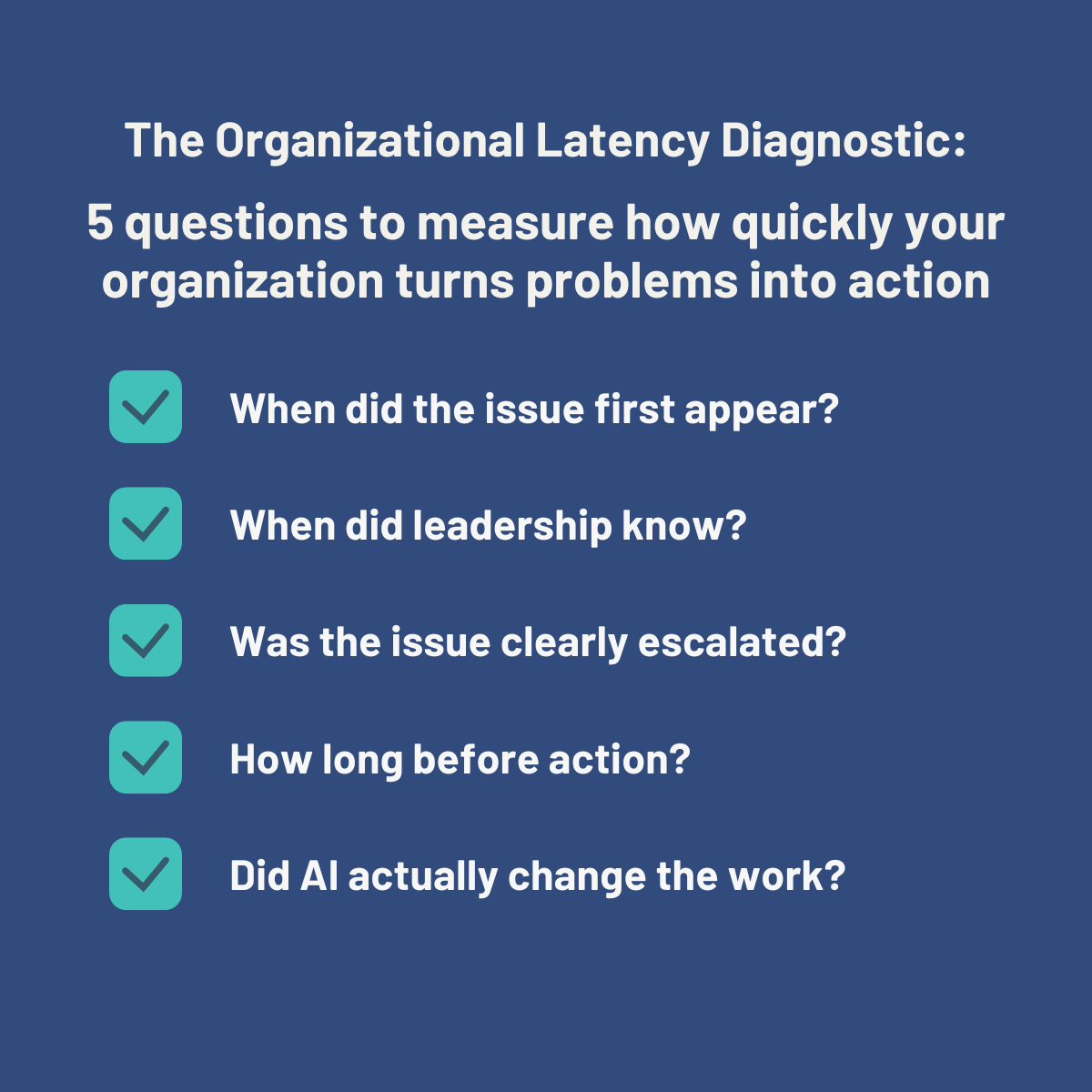
Organizational Latency Diagnostic checklist for measuring how quickly problems turn into action

Five Questions to Measure How Quickly Your Organization Turns Problems Into Action Use this diagnostic to estimate your organization’s current Organizational Latency score and identify where delays occur between operational problems and leadership action. Most executive teams know they are learning about important problems later than they would like. The harder question is: how much … Read more

Organizational Latency: The Hidden Cost of Delayed Insight

Every organization has a number it never measures: how long it takes for a real problem to reach someone who can act on it. Call it organizational latency. A working definition: Organizational latency is the delay between when an important event occurs, such as a market shift or internal problem, and when the organization understands … Read more